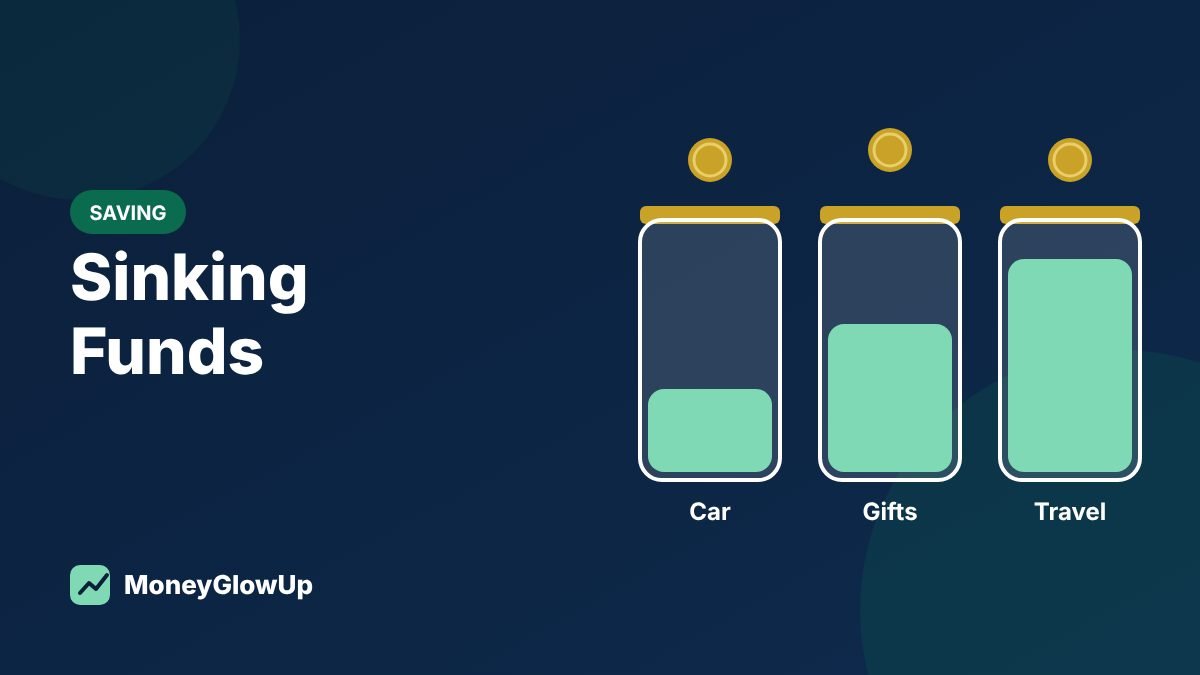
A sinking fund is money you set aside a little at a time for a cost you know is coming — like car registration, holiday gifts or an annual subscription. Instead of one big hit, you pay yourself small monthly amounts in advance.
Note: in corporate finance, “sinking fund” also means money a company sets aside to repay bonds. This guide is about the personal-budgeting meaning.
Sinking fund vs. emergency fund
| Sinking fund | Emergency fund | |
|---|---|---|
| Purpose | Planned or predictable costs | True surprises — job loss, urgent repairs |
| Timing known? | Usually yes | No |
| Example | New tires next spring | Sudden car breakdown |
Keeping them separate protects your emergency fund from being drained by expenses that weren’t really emergencies.
Set one up in 4 steps
- List irregular costs from the past 12 months of bank and card statements.
- Estimate the yearly amount for each.
- Divide by the months remaining until each cost is due (or by 12 for yearly costs).
- Automate a transfer after payday into a separate savings account or labeled “bucket”.
Illustrative example (made-up numbers): one monthly transfer covers five future costs
| Cost | Per year | Per month |
|---|---|---|
| Car registration | $180 | $15 |
| Holiday gifts | $600 | $50 |
| Car maintenance | $480 | $40 |
| Annual subscriptions | $120 | $10 |
| Medical copays | $300 | $25 |
| Total | $1,680 | $140 |
$1,680 ÷ 12 = $140 a month. When a bill arrives, the money is already waiting.
If a cost is due soon
Divide by the months you actually have. A $600 holiday budget due in 4 months needs $150 a month, not $50. If that is too much, lower the target now rather than borrowing later.
Where to keep sinking funds
Somewhere separate from everyday spending, easy to reach and insured — many banks let you create named savings “buckets” inside one account. Deposits at FDIC-insured banks and NCUA-insured credit unions are covered up to $250,000 per depositor, per institution, per ownership category. Compare options in Where to Keep Your Emergency Fund; the same logic applies.
Ideas for sinking-fund categories
| Category | Examples |
|---|---|
| Car | Registration, inspection, new tires, regular maintenance, insurance paid annually |
| Home | Renter’s insurance renewal, furniture or appliance replacement, moving costs |
| Health | Dental cleaning, eye exam and glasses, copays and deductibles |
| Celebrations | Holiday gifts, birthdays, weddings you’ll attend |
| Personal | Annual subscriptions and memberships, back-to-school costs, travel |
| Work | Professional license renewals, a laptop replacement |
One account or many?
| Approach | Pros | Cons |
|---|---|---|
| One savings account + a spreadsheet | Simple; one place to transfer to | You must track each fund’s balance yourself |
| Named “buckets” inside one account | Balances tracked automatically; easy to see | Not every bank offers it |
| Separate accounts for big funds | Hard to mix up | More accounts to manage; check for fees or minimums |
Common mistakes
- Too many funds at once. Start with the three most expensive irregular costs, then add more.
- Borrowing between funds without a note. If you move money from “Gifts” to “Car,” write it down and plan to refill it.
- Using the emergency fund instead. Predictable costs belong in a sinking fund, not your emergency fund.
- Forgetting to adjust. Update amounts once a year as prices change.
Frequently asked questions
How much should I put in each sinking fund?
Divide the expected cost by the number of months until it is due. If the total is more than your budget allows, lower the target or spread it over a longer period.
What happens to money left over?
Leave it in the fund for next time, or move it to another goal. Either is fine — just decide on purpose.
Is a sinking fund the same as savings?
It is a type of savings with a specific job and date. General savings and your emergency fund stay separate.
Next step
Scan last year’s statements for three irregular costs, add them up, divide by 12, and add that line to your monthly budget.
Sources
- FDIC — Understanding Deposit Insurance (accessed Oct 29, 2026)
- NCUA — Share Insurance Coverage (accessed Oct 29, 2026)
- Consumer Financial Protection Bureau — Monthly budget worksheet (accessed Oct 29, 2026)