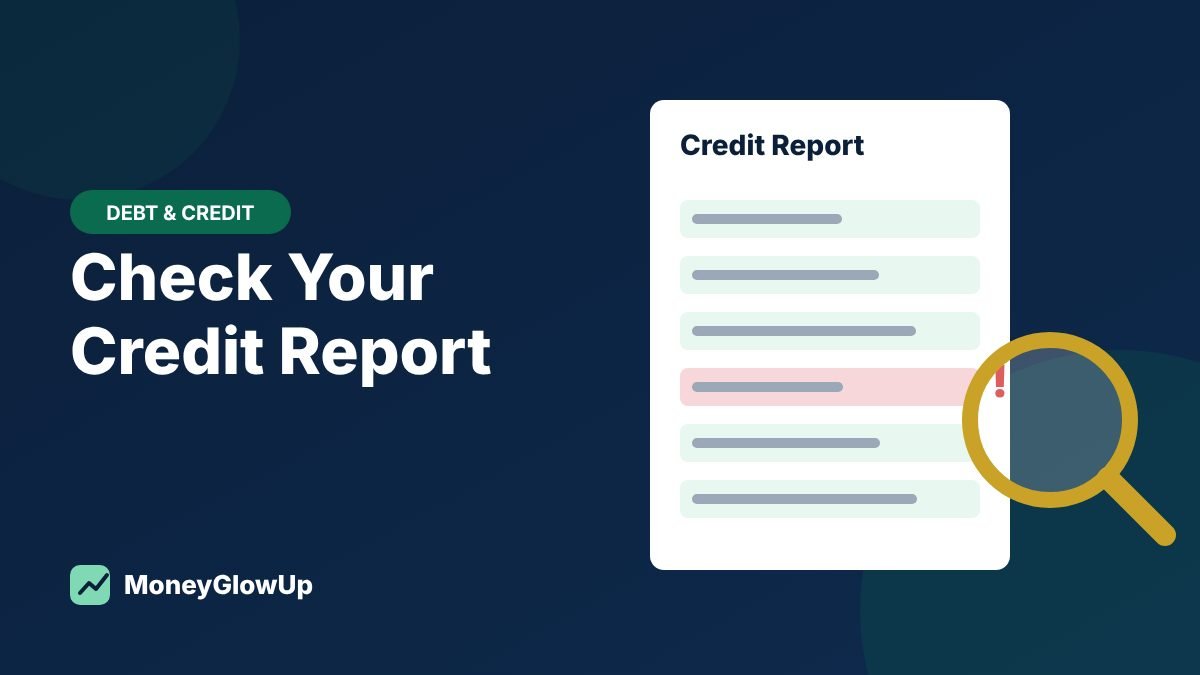
You can check your credit reports from Equifax, Experian and TransUnion for free every week at AnnualCreditReport.com — the official site named by the Federal Trade Commission. If you find a mistake, you have the right to dispute it. Here is a step-by-step guide.
Step 1: Get your reports from the official site
Use AnnualCreditReport.com. The FTC warns that look-alike sites may charge you or try to steal your personal information. Free weekly access, introduced during the pandemic, is now permanent.
Step 2: Check these sections
| Section | What to look for |
|---|---|
| Personal information | Wrong name spelling, addresses you never lived at, unknown employers |
| Accounts | Accounts you don’t recognize, wrong balances or credit limits, closed accounts shown as open |
| Payment history | Late payments you believe were on time |
| Inquiries | Hard inquiries you didn’t authorize |
| Public records & collections | Debts that aren’t yours or are listed twice |
Accounts you don’t recognize can be a sign of identity theft. The federal site for reporting and recovery is IdentityTheft.gov.
Step 3: Dispute with the credit bureau
- Explain in writing what is wrong and why.
- Include copies — not originals — of documents that support your claim.
- Mark the errors on a copy of your report and list each account number.
- You can dispute online, by mail or by phone. If you mail it, certified mail with a return receipt gives you proof.
- Keep copies of everything.
The CFPB publishes free sample dispute letters you can adapt (see sources).
Step 4: Dispute with the company that reported it
Also send a written dispute to the furnisher — the lender, landlord or card company that supplied the information. Furnishers generally must investigate and respond within 30 days.
What happens next
| Outcome | What it means |
|---|---|
| Corrected or deleted | The furnisher must notify the credit bureaus; if your file changes, the bureau sends you a free updated report |
| Verified as accurate | You can ask the bureau to add a statement explaining your dispute to your file |
| Rejected as frivolous | The bureau must tell you and explain why — usually because the dispute didn’t say what was wrong |
Be careful with “credit repair” shortcuts
No one can legally remove accurate, timely negative information from your report. The FTC has warned about influencers promoting illegal tricks to “fix” credit. Disputing genuine errors yourself is free.
Credit report vs. credit score
Your credit report is the record of your accounts and payment history. A credit score is a number calculated from a report. The free weekly reports at AnnualCreditReport.com do not include scores. Fixing a genuine error on your report can change scores calculated from it.
A simple review checklist
- Personal details: name, addresses, Social Security number (partially shown), employers.
- Every account: do you recognize it, and are the balance, limit and status right?
- Payment history: are any late payments marked that you paid on time?
- Hard inquiries: did you apply for each one?
- Collections: are any debts not yours, already paid, or listed twice?
Keep a dispute log
| Date | Bureau or company | Item disputed | How sent | Response due | Result |
|---|---|---|---|---|---|
| Example: Mar 3 | Bureau name | Card account ending 1234 — late payment | Online + copy saved | About 30 days later | Pending |
Frequently asked questions
Does checking my own credit report hurt my score?
No. Checking your own report is not a hard inquiry.
Do I have to dispute with all three bureaus?
Dispute with each bureau whose report shows the error. Information can differ between Equifax, Experian and TransUnion.
How long does a dispute take?
Credit bureaus generally have 30 days to investigate, according to the FTC. Keep your records until the matter is resolved.
Should I pay a credit repair company?
You can dispute errors yourself for free. No one can legally remove accurate, timely negative information.
Next step
Put a recurring reminder on your bill calendar to check one report each month or quarter, rotating between the three bureaus.
Sources
- Federal Trade Commission — You now have permanent access to free weekly credit reports (accessed Oct 29, 2026)
- Consumer Financial Protection Bureau — How do I dispute an error on my credit report? (last reviewed Sep 2, 2026) (accessed Oct 29, 2026)
- Federal Trade Commission — Disputing Errors on Your Credit Reports (accessed Oct 29, 2026)
- Consumer Financial Protection Bureau — Sample letters to dispute information on a credit report (accessed Oct 29, 2026)