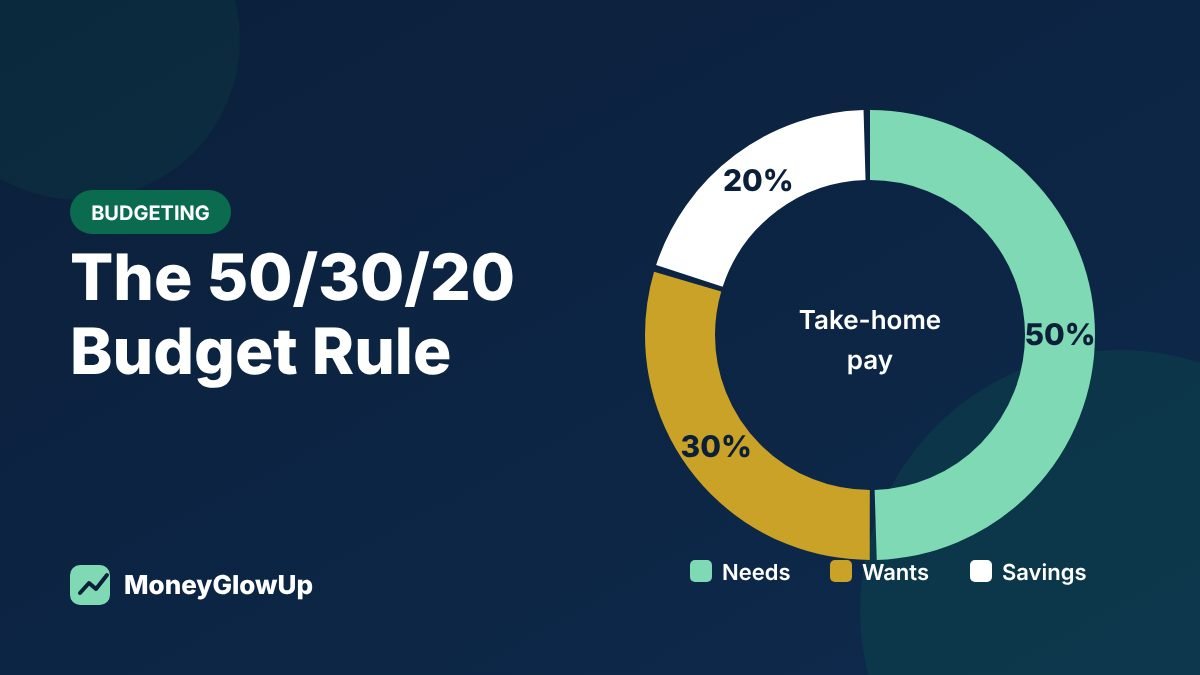
The 50/30/20 rule splits your take-home pay into three buckets: about 50% for needs, 30% for wants and 20% for savings and extra debt payments. It is a quick starting point, not a law — and for many people, needs take more than half. Here is how to use it, and how to adjust it honestly.
The three buckets
| Bucket | Share | What goes in it |
|---|---|---|
| Needs | ≈ 50% | Housing, utilities, groceries, transportation to work, insurance, minimum debt payments |
| Wants | ≈ 30% | Eating out, entertainment, hobbies, travel, upgrades beyond the basics |
| Savings & extra debt | ≈ 20% | Emergency fund, sinking funds, retirement contributions, payments above the minimum |
Run the numbers in 3 steps
- Start from take-home pay — what reaches your bank account after taxes and payroll deductions.
- Multiply by 0.50, 0.30 and 0.20 to get your three targets.
- Compare each target with what you actually spent last month (your spending tracker makes this easy).
Illustrative example (made-up numbers): $3,200 take-home pay
| Bucket | Target | Actual last month | Gap |
|---|---|---|---|
| Needs | $1,600 | $1,880 | +$280 |
| Wants | $960 | $720 | −$240 |
| Savings & extra debt | $640 | $600 | −$40 |
| Total | $3,200 | $3,200 |
Needs run $280 over target, mostly because of rent. Instead of forcing an unrealistic cut, this person trims wants by $240 and keeps savings close to the 20% target.
Why needs often take more than 50%
Housing and transportation alone made up 50% of average U.S. household spending in 2024, according to the Bureau of Labor Statistics — housing 33.4% and transportation 17.0%. Those are averages across all spending, not take-home pay, but they show why the 50% target can be hard, especially in expensive cities.
If your needs are high, treat the rule as a direction rather than a test you failed. Common adjustments:
| Situation | A realistic split to try |
|---|---|
| High rent or long commute | 60 / 20 / 20 — protect savings by cutting wants first |
| Paying off high-interest debt | 50 / 20 / 30 — move wants into extra debt payments for a while |
| Very tight month | Cover needs, save something small, revisit next month |
What counts as a “need”?
The gray areas cause most of the confusion. A phone plan is a need; the newest phone usually isn’t. Groceries are needs; delivery fees are wants. Our guide to needs vs. wants has a simple four-question test.
Is 50/30/20 right for you?
| Works well if you… | Consider another method if you… |
|---|---|
| Want a simple, low-effort plan | Like assigning every dollar a job — try a zero-based budget |
| Have a steady paycheck | Have income that changes month to month — see budgeting with irregular income |
| Are just starting out | Need tight control of one problem category |
Where common expenses usually go
| Expense | Usual bucket | Why |
|---|---|---|
| Rent or mortgage, utilities | Needs | Housing you need to live and work |
| Minimum loan and card payments | Needs | Missing them brings fees and credit damage |
| Payments above the minimum | Savings & extra debt | They reduce debt faster — that is progress, not spending |
| Retirement contributions from your paycheck | Savings | If they come out before take-home pay, note them separately so you don’t double count |
| Streaming, dining out, hobbies | Wants | Nice to have, not required |
| Gym membership | Usually wants | Unless it is the only practical way you get needed exercise |
Common mistakes
- Using gross pay. The rule is based on take-home pay; using your salary before taxes makes every target too big.
- Counting payroll savings twice. If your 401(k) contribution is taken out before your paycheck, either add it back to take-home pay and count it in savings, or leave it out of both.
- Calling every upgrade a need. Split mixed costs — the basic phone plan is a need, the premium tier is a want.
- Giving up after one month. The first month is a measurement. Adjust the targets, then try again.
Illustrative example (made-up numbers): adjusting when needs are high
Sam takes home $2,800. Needs cost $1,820 — 65%, well above 50%. Instead of abandoning the plan, Sam sets a temporary 65/20/15 split: $560 for wants and $420 for savings. Sam then looks for one needs cost to lower over the next six months, such as a cheaper phone plan or car insurance quote, and moves any savings into the 20% bucket.
Frequently asked questions
Is 50/30/20 based on gross or net income?
Net — your take-home pay after taxes and payroll deductions. That is the money you actually have to divide.
Where does debt go in 50/30/20?
Minimum payments are needs. Anything you pay above the minimum goes in the 20% bucket with savings.
What if I can’t save 20%?
Save what you can, even a small fixed amount, and treat 20% as a direction. Raising savings by 1–2% of income each time you get a raise is a common way to close the gap.
Can I use 50/30/20 with irregular income?
Yes, but base it on a conservative monthly amount rather than your best month — see budgeting with irregular income.
Next step
Write your three targets on paper, then compare them with last month’s spending. If you haven’t made a full plan yet, start with How to Create Your First Monthly Budget.
Sources
- U.S. Bureau of Labor Statistics — Housing and transportation accounted for 50 percent of household spending in 2024 (The Economics Daily, Feb 12, 2026) (accessed Oct 29, 2026)
- Consumer Financial Protection Bureau — Monthly budget worksheet (accessed Oct 29, 2026)